Educating young people with WASH practices
Educating young people with WASH practices
Educating young people with WASH practices
Educating underserved youth with WASH practices.
Educating underserved youth with WASH practices.
Educating underserved youth with WASH practices.
Duration
Duration
Ongoing Since (September 2024)
Ongoing Since (September 2024)
Industry
Social Sector
Social Sector
Client
Village Water, Germs Journey
Village Water, Germs Journey
my role
User Researcher
Service Designer
Team
User Researchers, 3 Service Designers (including me), Innovation Manager, UX designer
User Researchers, 3 Service Designers (including me), Innovation Manager, UX designer

PROJECT OVERVIEW
PROJECT OVERVIEW
PROJECT OVERVIEW
According to global data tracking by the World Health Organization and UNICEF, 1.5 Billion people lack access to safe drinking water and basic sanitation and hygiene facilities.
To limit the spread of diseases and support students’ health and their school performance, there is a need to raise awareness, coach behavior on good hygiene practices and prepare them to become more resilient to the effects of climate change. Liberia went through 10 years of civil crises so most of people lack education and also a lack of awareness on practices and actions needed to exacerbate the effects of climate change.
This project aims to educate underserve youth on importance of Water, Sanitation and Hygiene (WASH) practices, its impacts on their health and larger community by implementing the learning in day-to-day activities.
Process Overview
Process Overview
Process Overview

Challenge
Challenge
Challenge
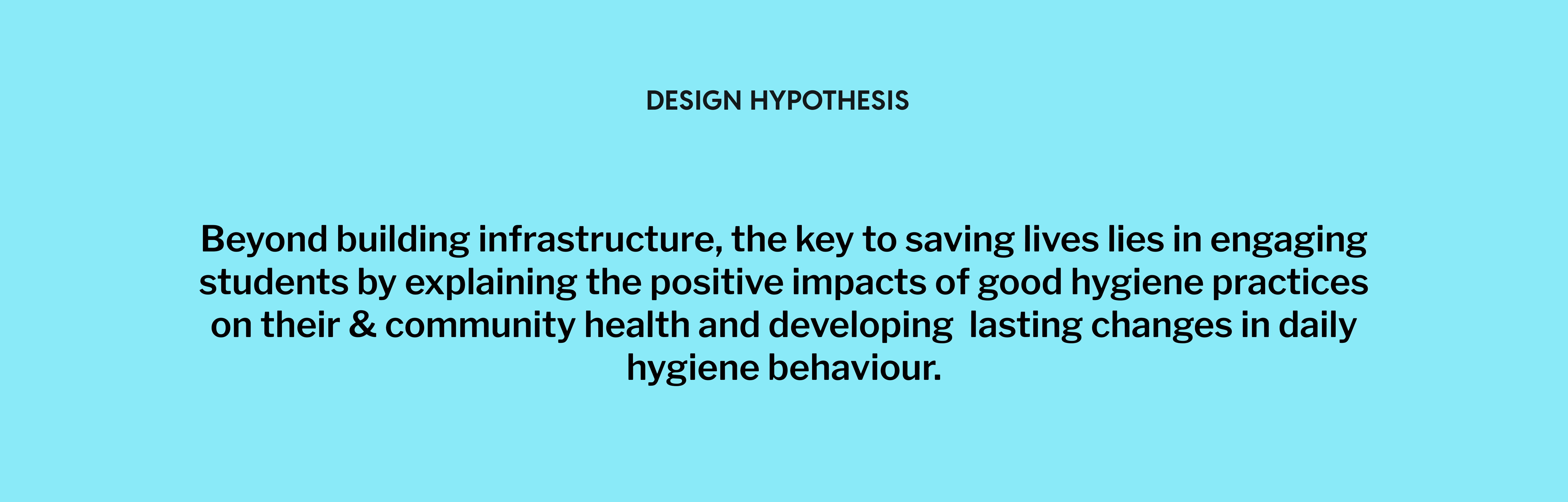
“How can we engage and educate young people to better understand the importance of water, sanitation and practicing good hygiene?”
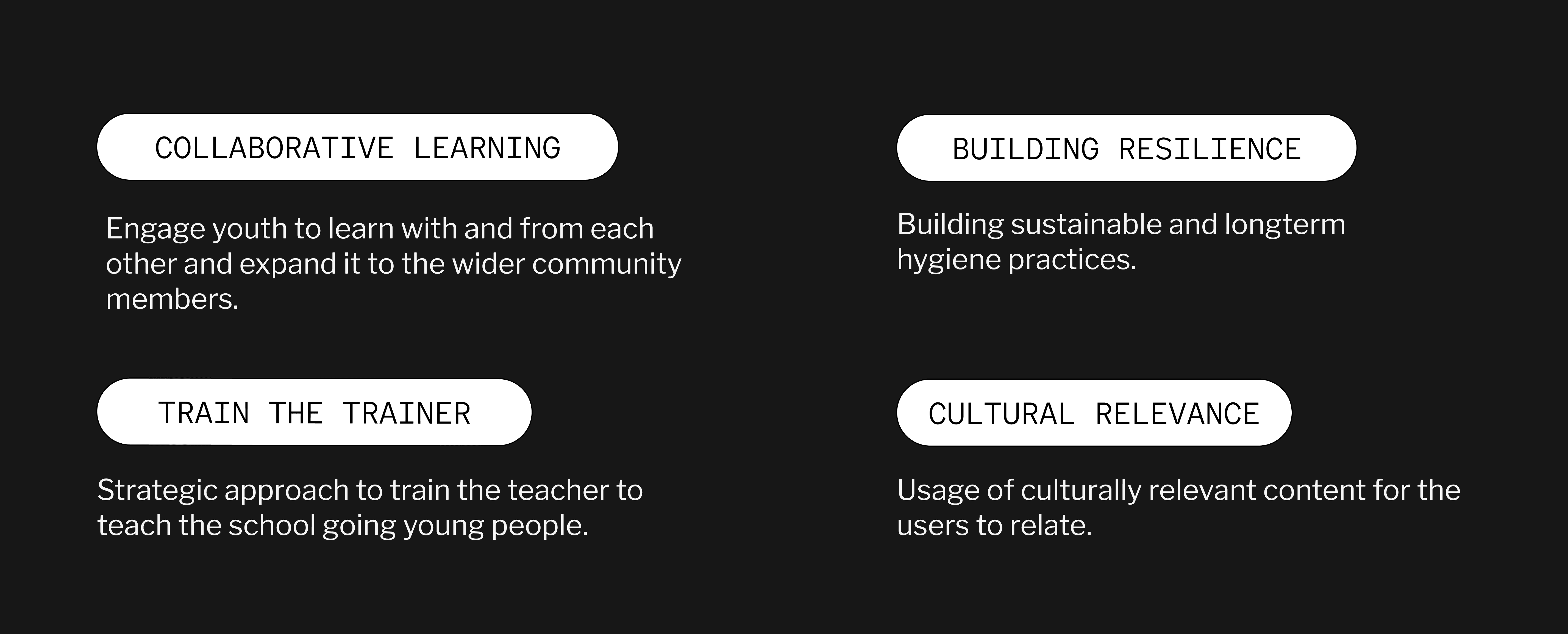
The design challenge is to use Play based learning to make education more engaging, memorable, and effective for young people and could be extended to the larger community.
Because one of the biggest challenges in this work is behavior change as knowledge alone isn’t enough, engagement is critical.
My Contribution
My Contribution
My Contribution
I am contributing as a Design Researcher and Service Designer by collaborating with multidisciplinory team and stakeholders in the process.
I conducted user and stakeholder interviews, internal team workshop to map Service Design artifacts such as ecosystem map and user journey. I also conducted ideation workshop within the larger team and contributed to building the AI enabled prototype.
I am currently creating prototype kit and test cases for 1st pilot testing with real users in the school across Zambia and Mozambique in Africa and Pakistan.
Impact Aim
Impact Aim
Impact Aim
6714
6714
6714
Lives touched
Lives touched
Lives touched
Students + teachers + 25% sharing information with at least 1 person
Students + teachers + 25% sharing information with at least 1 person
Students + teachers + 25% sharing information with at least 1 person
2,509
2,509
2,509
STUDENTS IMPROVED HYGINE PRACTICE KNOWLEDGE
STUDENTS IMPROVED HYGINE PRACTICE KNOWLEDGE
STUDENTS IMPROVED HYGINE PRACTICE KNOWLEDGE
People will remember correct hygiene practice to wash their hands
People will remember correct hygiene practice to wash their hands
People will remember correct hygiene practice to wash their hands
490
490
490
Users adopting new Behavior
Users adopting new Behavior
Users adopting new Behavior
10% of students, 50% of teachers, and 1% of community will assimilated best practices
10% of students, 50% of teachers, and 1% of community will assimilated best practices
10% of students, 50% of teachers, and 1% of community will assimilated best practices
APPROACH
APPROACH
APPROACH
Understanding the System
We began the project by gathering the research data from news reports, data analysis provided by LYPW, and social media research to understand the system, behaviours and user needs around hygiene and sanitation, social- cultural fit and engagement initiatives for the youth of Liberia.
We did not have direct access to the users so we conducted multiple Interviews with partner stakeholders, schools facilities and teachers to uncover the gaps in our knowledge and enrich the understanding about the problem.

SOLUTION
SOLUTION
SOLUTION
Aisha's Adventure
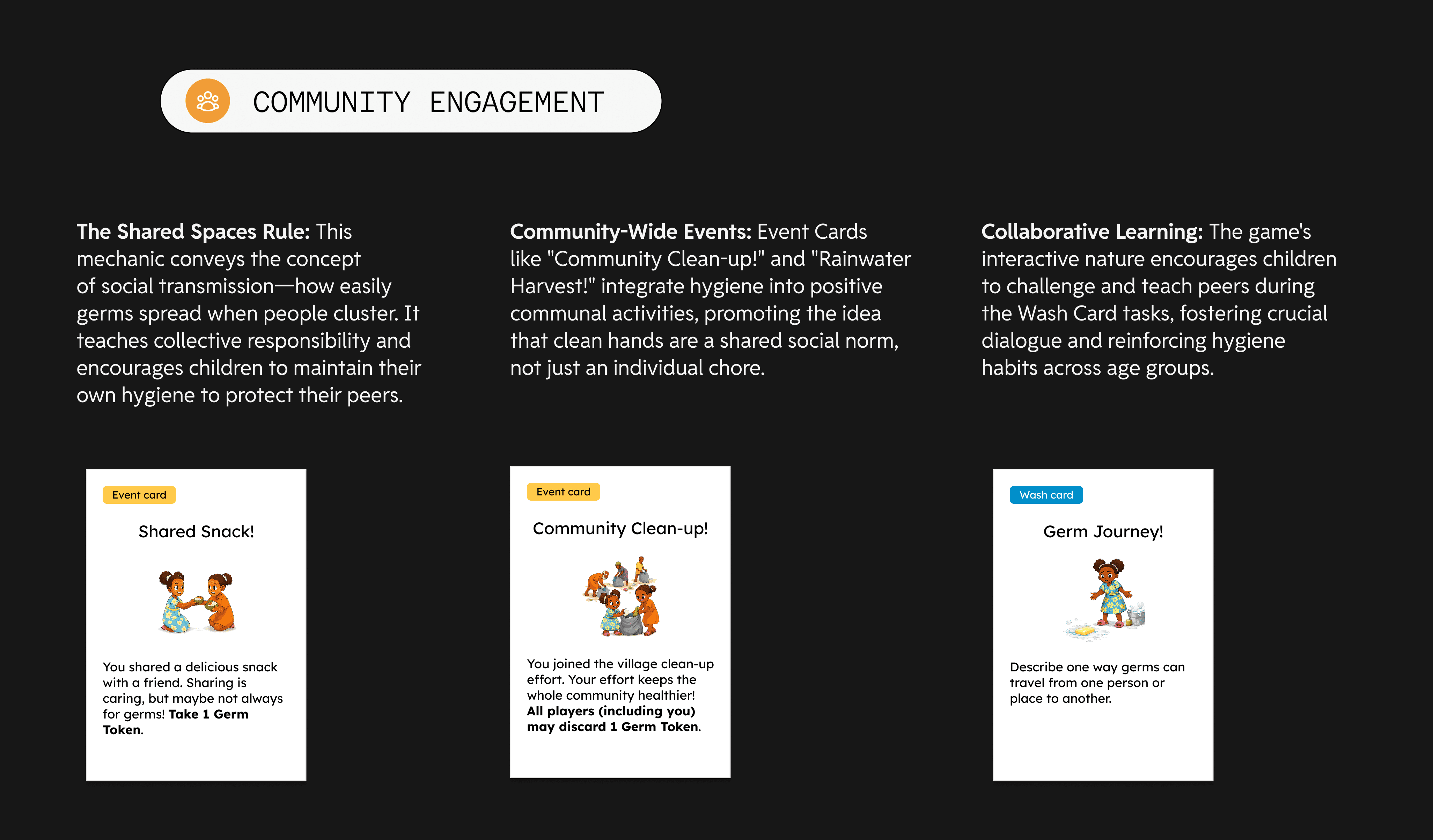
A fun, competitive, and educational board game, which teaches essential hygiene habits through engaging gameplay.
Aisha's Adventure
A fun, competitive, and educational board game, which teaches essential hygiene habits through engaging gameplay.
Aisha's Adventure
A fun, competitive, and educational board game, which teaches essential hygiene habits through engaging gameplay.


DESIGN DECISIONS
DESIGN DECISIONS
DESIGN DECISIONS



Feasibility & Usability
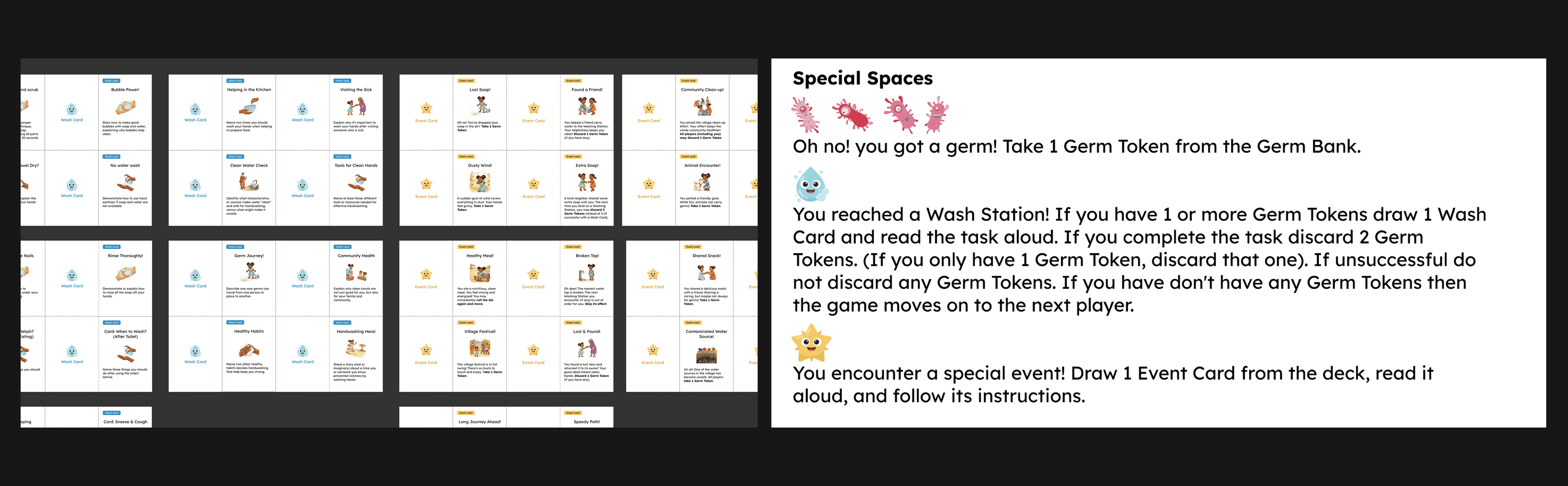
Home printing: The board and game elements are designed to be printed on standard A4 sheets and use a minimal amount of ink, making it easy for local NGOs or schools to produce and replace boards using standard office equipment.
Universal Components: The game uses a standard 1-6 die and a printable die is supplied.
Colour-code logic: The board uses a "Stop/Go" color logic (Red = Bad/Germs, Blue = Good/Wash). This is a universal visual language that children pick up instantly.
Feasibility & Usability
Home printing: The board and game elements are designed to be printed on standard A4 sheets and use a minimal amount of ink, making it easy for local NGOs or schools to produce and replace boards using standard office equipment.
Universal Components: The game uses a standard 1-6 die and a printable die is supplied.
Colour-code logic: The board uses a "Stop/Go" color logic (Red = Bad/Germs, Blue = Good/Wash). This is a universal visual language that children pick up instantly.
Process
Process
Process
Student Hygiene Journey Mapping
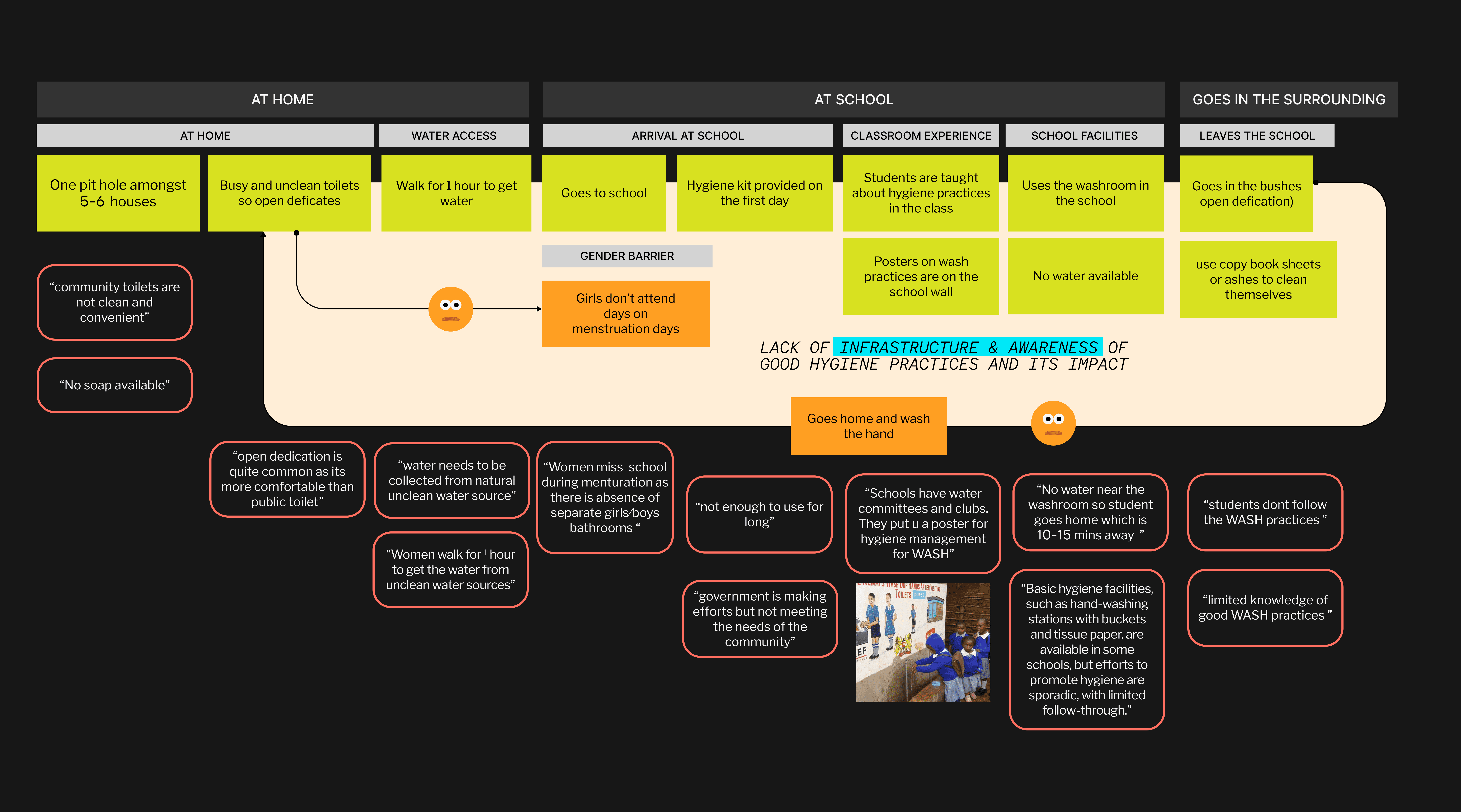
We mapped student's current journey by involving the stakeholder partners to understand where the gap in education lies and what are the challenges student face.
Student Hygiene Journey Mapping
We mapped student's current journey by involving the stakeholder partners to understand where the gap in education lies and what are the challenges student face.
Student Hygiene Journey Mapping
We mapped student's current journey by involving the stakeholder partners to understand where the gap in education lies and what are the challenges student face.
Understanding the stakeholder ecosystem
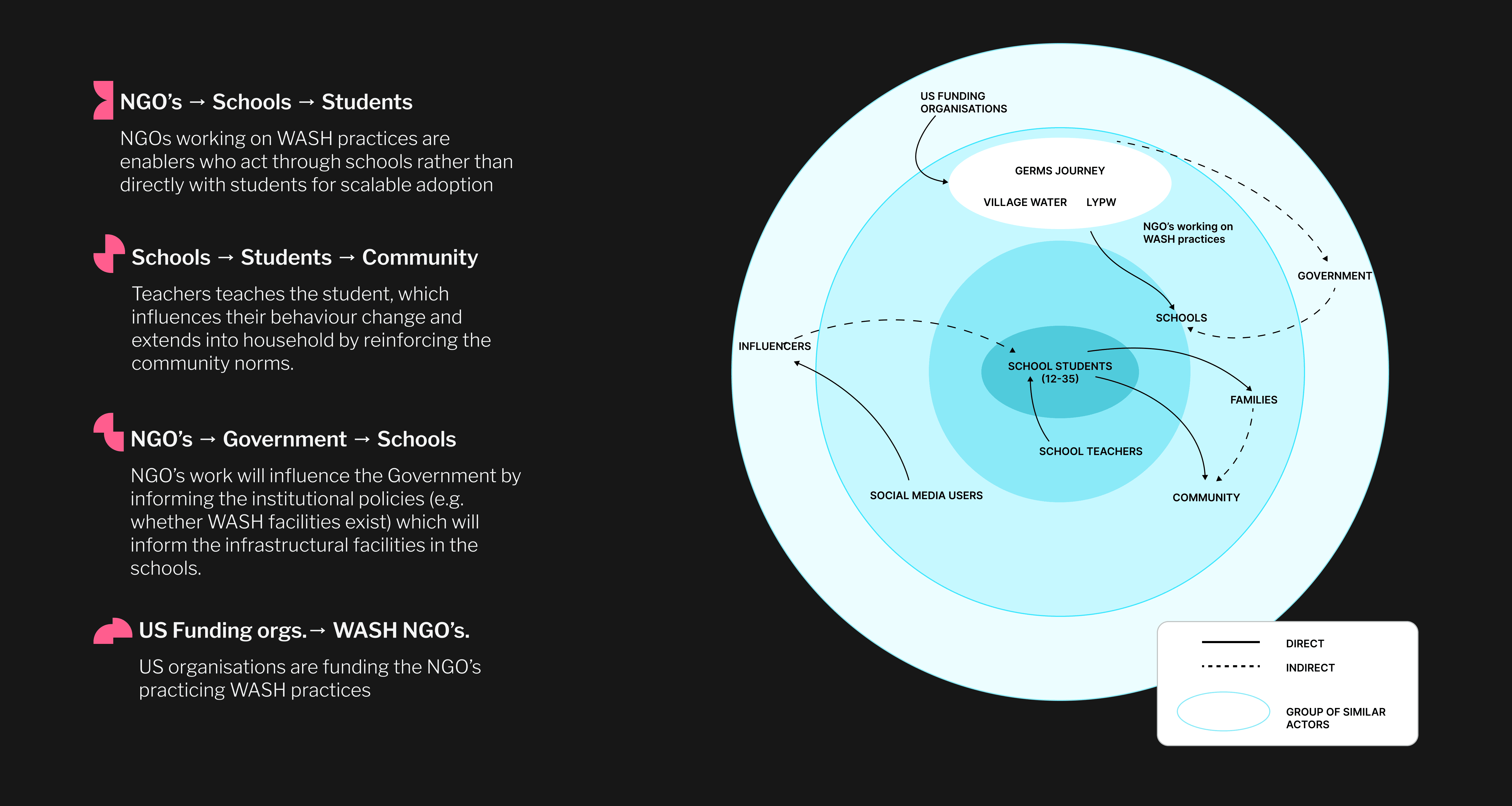
We mapped the stakeholder ecosystem to understand all the actors involved in the system and their relation with each other.
Understanding the stakeholder ecosystem
We mapped the stakeholder ecosystem to understand all the actors involved in the system and their relation with each other.
Understanding the stakeholder ecosystem
We mapped the stakeholder ecosystem to understand all the actors involved in the system and their relation with each other.
Opportunity Identified
Opportunity Identified
Opportunity Identified
User Testing
Pre-Game knowledge testing- To establish a baseline understanding - prior to playing the game, students will be asked to demonstrate their understanding of hand washing practices to the observer without prompts.The observer will score the number of correct steps, note any additional, deviating or missing steps.
Questions & Observation- The observer will note down points about group demographics, including age mix, independently before gameplay.
Questions will then be discussed with the students after gameplay about what they enjoyed and might have got confused about. The observer will independently note observations about key moments and group behaviours after the fact.
Post-Game Knowledge Testing- A teach-back round at the end of the game in which the students take it in turns to demonstrate the steps to each other. The observer notes if students could do the steps or not, and if they offer support to each other. Ideally, a hand washing demonstration would be repeated a few weeks later to test longer term retention. The observer would note if the students used any ‘tricks’ (e.g. associated memories) that enhanced retention.
Experts
Dr Clare Stovell
Inspiring Dads
NCT
12 Parents
9 Birth mothers
2 Non-birth parents
1 Expecting mother
Inclusive approach
Heterosexual
Homosexual
Different family structures
Parental Journey
2-3 year olds
During pregnancy
Newborn
Experts
Dr Clare Stovell
Inspiring Dads
NCT
12 Parents
9 Birth mothers
2 Non-birth parents
1 Expecting mother
Inclusive approach
Heterosexual
Homosexual
Different family structures
Parental Journey
2-3 year olds
During pregnancy
Newborn
Related projects

Care to Share?
Care to Share?
Mapping Made Simple
Mapping Made Simple
Chat over a cup of chai?
© 2025 ARYA ANKALE.
London, GMT+ 0:00
Chat over a cup of chai?
© 2025 ARYA ANKALE.
London, GMT+ 0:00
Chat over a cup of chai?
© 2025 ARYA ANKALE.
London, GMT+ 0:00